
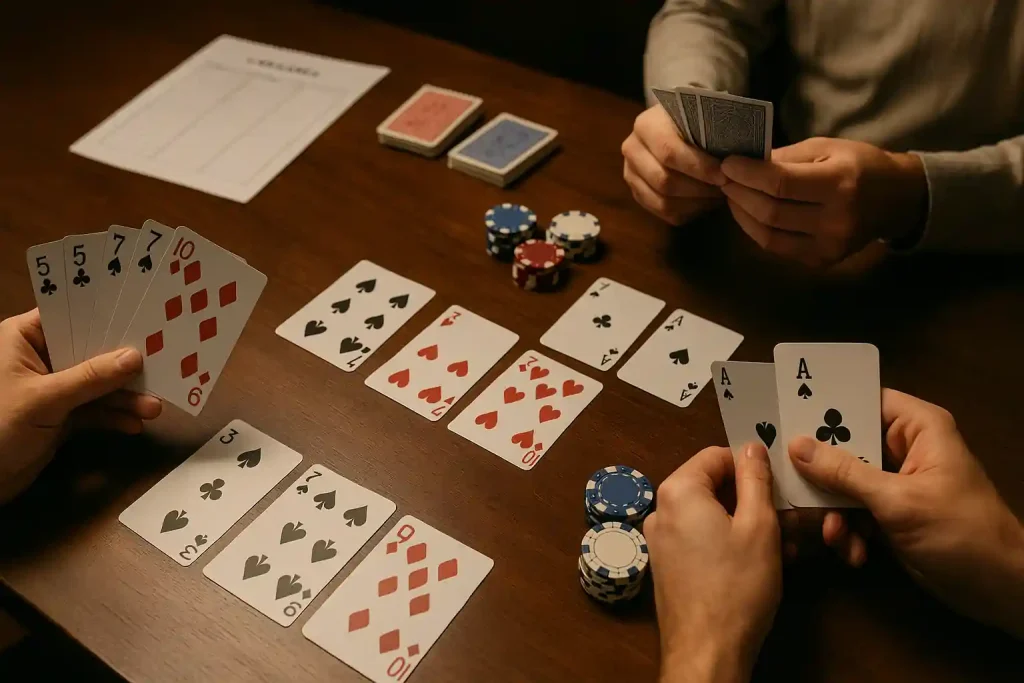
A card game is a simple yet engaging form of entertainment enjoyed by people of different ages and backgrounds. With nothing more than a deck of cards and a clear set of rules, players can enjoy friendly competition, strategic challenges, or relaxed social interaction. Some games take only a few minutes, while others can continue for hours.
The lasting popularity of card games comes from their variety. Players can choose activities based on luck, memory, speed, strategy, or a combination of several skills. This makes cards suitable for family gatherings, friendly competitions, quiet evenings, and many other occasions.
The Basic Idea Behind Card Games
At its core, a card game involves players using cards according to a specific structure and objective. Depending on the game, players may draw cards, discard them, arrange combinations, collect sets, compete for points, or try to complete a particular sequence.
Traditional decks commonly contain four suits and cards ranging from numbered values to face cards. However, many modern games use their own cards, symbols, characters, and special instructions.
The rules can be simple enough for beginners to understand in minutes or detailed enough to reward players who spend time studying different strategies.
Different Categories of Card Games
There is no single way to play cards. The wide range of formats is one of the reasons these games continue to attract new players.
Strategy Games
Strategy-focused card games require players to think carefully about their choices. A good move may depend on the cards in hand, previous actions, and what opponents are likely to do next.
Players often need to balance immediate opportunities with longer-term plans. This makes strategy games particularly appealing to people who enjoy problem-solving and competition.
Matching and Collection Games
These games involve collecting pairs, groups, sequences, or other combinations. Players may draw cards from a central pile or exchange cards with others.
Their straightforward structure makes them suitable for casual play and beginners.
Trick-Taking Games
In trick-taking games, each player generally contributes a card to a round, and one player wins according to the game’s ranking system. Players may need to remember which cards have already appeared and predict what opponents might hold.
These games often become more strategic as players gain experience.
Solo Card Games
Card games do not always require a group. Many games can be played alone, offering an enjoyable way to spend time while practicing concentration and logical thinking.
Solo games can also be useful for learning how cards interact before introducing the game to other players.
The Role of Strategy
Although some card games depend heavily on luck, many also involve meaningful decisions. Players may have to decide whether to take a risk, save a valuable card, change their approach, or respond to an opponent’s move.
Good strategy often involves assessing the information available without knowing everything about the game. Players must make decisions based on probabilities, patterns, and previous actions.
This balance between uncertainty and control creates much of the excitement associated with card games.
Benefits of Playing Card Games
Card games can provide more than simple entertainment. Depending on the type of game, regular play can encourage useful mental and social skills.
Some potential benefits include:
- Improved concentration: Players must follow the action and remember important details.
- Better memory: Many games require players to recall previously played cards.
- Strategic thinking: Players consider possible outcomes before acting.
- Decision-making: Each turn can present several choices.
- Social interaction: Group games encourage conversation and cooperation.
- Patience: Players often need to wait for the right opportunity.
These qualities make card games a practical activity for both recreational and educational settings.
Choosing a Game for Your Group
Selecting the right game can make a major difference to the overall experience. A game that is too complicated may discourage beginners, while a very simple game might not challenge experienced players.
Before choosing, consider:
- How many people will participate?
- How much time is available?
- What age groups are playing?
- Do players prefer luck or strategy?
- Is the game easy to explain?
- Does everyone need to remain involved throughout the round?
Answering these questions can help identify a game that matches the group’s interests.
Card Games and Social Connections
One of the strongest qualities of a card game is its ability to bring people together. Players sit around the same table, communicate directly, and respond to one another throughout the experience.
Unlike entertainment that can be consumed individually, card games encourage active participation. Friendly competition can create laughter, memorable moments, and opportunities for people to connect.
They can be particularly useful during family gatherings or social events where participants want an activity that does not require complicated preparation.
Physical and Digital Card Games
Technology has changed how people play cards. Digital platforms allow players to enjoy familiar games on computers, tablets, and mobile devices. Online play can also connect people who are not in the same location.
Digital games often include automatic scoring, tutorials, and built-in rule explanations. These features can make complicated games easier to learn.
Physical cards, however, continue to offer a different experience. Shuffling, dealing, arranging cards, and sitting around a table provide a hands-on social element that many players appreciate.
How Beginners Can Get Started
Someone new to card games should begin with a game that has a manageable number of rules. Start by learning the objective, card values, turn order, and basic actions.
Playing a practice round can make unfamiliar rules easier to understand. It is often more effective to learn by doing than by trying to memorize every detail beforehand.
As confidence grows, players can explore more advanced strategies and variations.
Final Thoughts
A card game can provide entertainment, mental stimulation, and social interaction without requiring expensive equipment or complicated preparation. From simple family activities to advanced strategy competitions, there is a wide range of games to explore.
The best choice depends on the players, setting, and desired level of challenge. Whether using a traditional deck or a digital platform, card games continue to offer a flexible and enjoyable way to spend time, develop skills, and connect with others.