
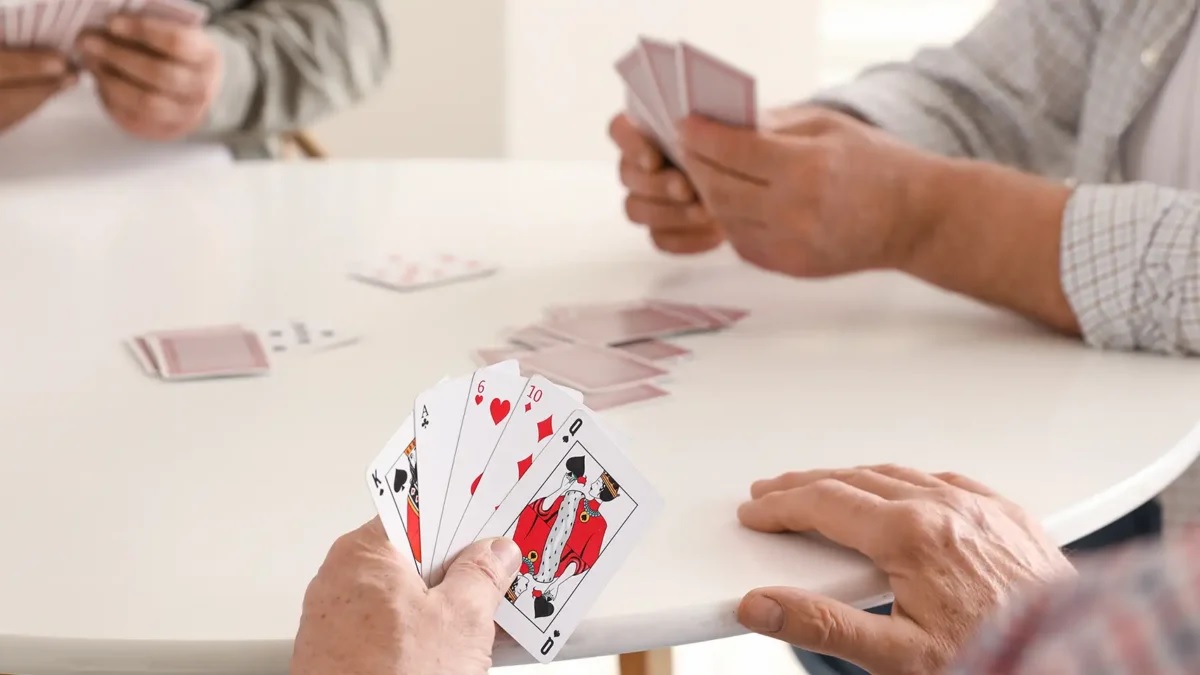
A card game is a simple activity with the power to provide hours of entertainment. With a deck of cards, a group of players, and a few basic rules, people can enjoy competition, strategy, relaxation, and social interaction. Card games have remained popular for generations because they can adapt to different ages, settings, and levels of experience.
Some games are quick and easy to learn, while others require patience, memory, and detailed planning. This variety makes cards suitable for casual gatherings as well as serious competition.
What Is a Card Game?
A card game is any game that uses cards as its primary playing equipment. The cards may come from a traditional deck or a specially designed set created for a particular game.
Players follow a defined set of rules to achieve an objective. Depending on the game, they might need to collect combinations, earn points, win rounds, complete sequences, or eliminate their cards before other participants.
The simplicity of this format allows card games to take many different forms without requiring complicated equipment.
Different Forms of Card Games
The world of card games is extremely diverse. Different formats emphasize different skills and styles of play.
Trick-Taking Games
Trick-taking games involve players competing to win individual rounds. Each participant usually plays one card, and the winner is determined according to the game’s ranking rules.
These games often reward memory and planning because players must remember which cards have already appeared.
Matching Games
Matching games focus on finding pairs, groups, or sequences. They are generally straightforward and can be enjoyed by beginners.
Because the rules are often easy to explain, matching games can be useful for family gatherings and casual play.
Strategy Games
Strategy games require players to think carefully about their actions. A decision made early in the game can influence opportunities several turns later.
Players may need to study their own cards, observe opponents, manage resources, and adapt their plans as the situation changes.
Solo Card Games
A card game can also be played alone. Solo formats provide players with challenges based on arranging cards, completing patterns, or reaching specific goals.
They are convenient for quiet periods when other players are unavailable.
Balancing Luck and Skill
One of the most interesting aspects of many card games is the relationship between chance and skill. Players may not control which cards they receive, but they can control how they use them.
This means that a poor hand does not always result in a poor outcome. Careful decisions may improve a difficult situation, while an inexperienced player can waste an advantage.
The balance between unpredictable cards and thoughtful decisions creates tension and excitement.
The Importance of Strategy
Strategy becomes more important as players gain experience. Beginners may concentrate mainly on the cards in front of them, while experienced players often consider the wider situation.
They may ask:
- What cards have already been played?
- What might another player be holding?
- Which move gives the best opportunity later?
- Is it better to take a risk or play safely?
- How could an opponent respond?
Thinking about these questions can make familiar games feel fresh and challenging.
Benefits of Playing Card Games
Card games can support a range of useful skills. While they should primarily be enjoyed as entertainment, many formats naturally encourage mental activity.
Potential benefits include:
- Improved memory: Players may need to remember cards and previous moves.
- Better concentration: Staying focused is important throughout a round.
- Strategic thinking: Players consider different options before acting.
- Problem-solving: Unexpected situations require flexible responses.
- Decision-making: Players must often choose between several possible moves.
- Social interaction: Multiplayer games encourage conversation and cooperation.
These qualities make card games suitable for both recreational and educational environments.
Choosing the Right Game
Not every game is suitable for every group. A game that works well for experienced players may be too complicated for beginners.
Before choosing a card game, consider the number of participants, expected playing time, age range, and difficulty level.
It can also help to decide whether the group prefers a game based mainly on luck or one that emphasizes strategy.
A good choice should be challenging enough to remain interesting without making new players feel overwhelmed.
Card Games and Social Connection
Cards have traditionally been associated with social gatherings. Players can sit around the same table, communicate directly, and share reactions throughout the game.
This interaction makes card games particularly useful for family evenings, celebrations, holidays, and casual meetings with friends.
Even when players are competing seriously, the shared experience can encourage conversation and create memorable moments.
Physical Cards and Digital Alternatives
Modern technology has changed the way people experience card games. Digital versions can be played on computers and mobile devices, often with automatic scoring and built-in instructions.
Online platforms can also allow players to compete with people who are far away. For beginners, digital versions may make complicated rules easier to understand because many actions are handled automatically.
Physical cards, however, continue to have their own appeal. Shuffling, dealing, arranging cards, and sitting together around a table create a hands-on experience that many people value.
Learning a New Game
When learning a new card game, beginners should start with the main objective and basic rules. There is usually no need to memorize every special situation before playing.
A practice round can make the rules easier to understand. Players can ask questions as they encounter unfamiliar situations and gradually become more comfortable with the flow of the game.
Once the basics are familiar, studying strategy can make the experience more rewarding.
Creating a Positive Playing Environment
Good card games should be enjoyable for everyone involved. Players should explain unfamiliar rules patiently and avoid making beginners feel uncomfortable about mistakes.
Friendly competition works best when everyone respects the rules and remembers that the primary purpose is entertainment.
A relaxed atmosphere can make even a simple game more enjoyable and encourage people to play again.
Final Thoughts
A card game offers an accessible combination of entertainment, strategy, and social interaction. Its basic equipment is simple, but the possibilities are almost endless.
From quick matching games and solo challenges to complex competitive formats, cards can suit many interests and skill levels. Their adaptability has allowed them to remain relevant despite major changes in technology and entertainment.
Whether played casually with family or seriously among experienced competitors, card games continue to prove that a small deck can create engaging experiences, meaningful challenges, and lasting memories.