
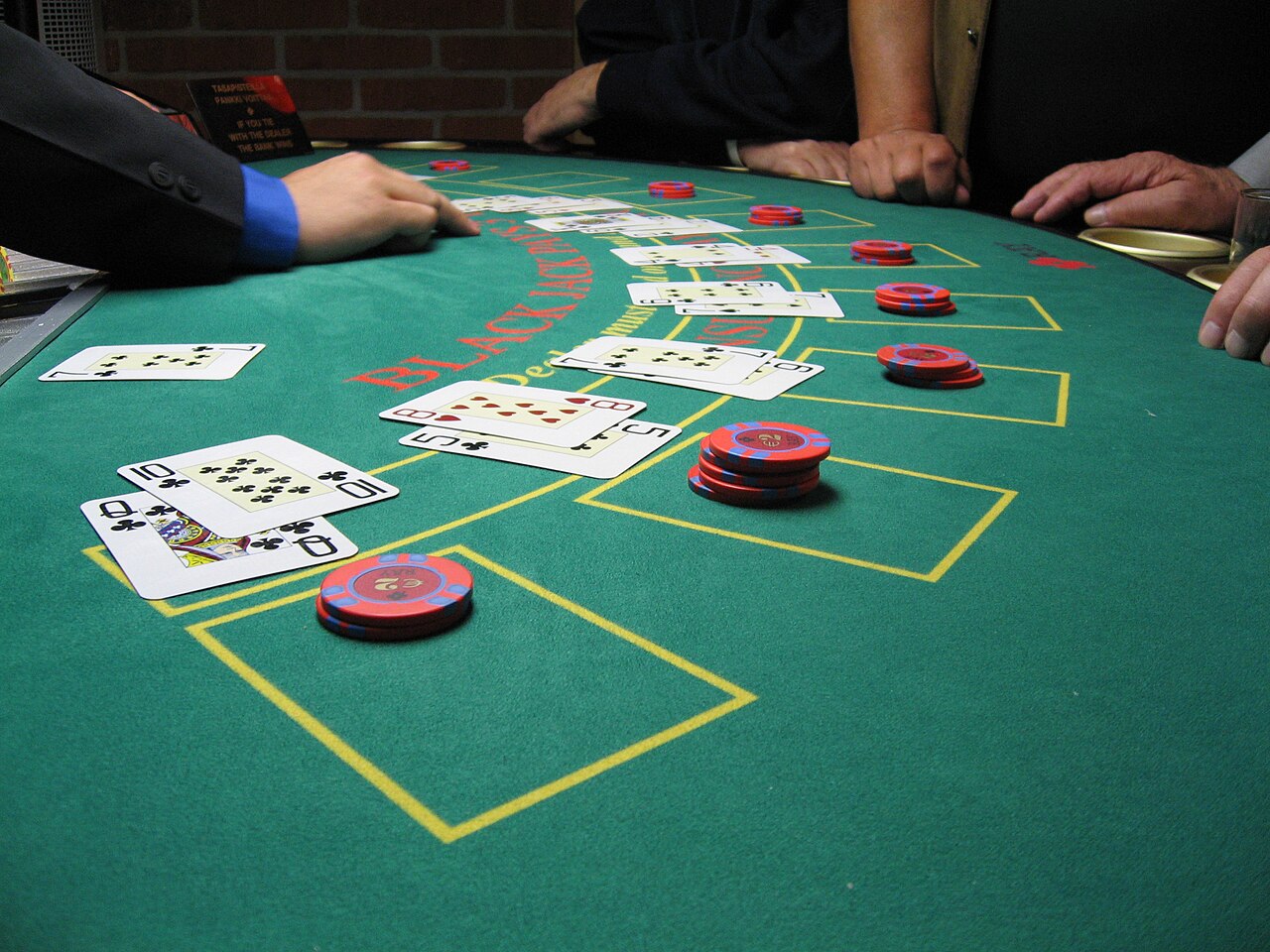
Blackjack is one of the most recognizable card games in the world. Known for its simple rules, quick rounds, and blend of luck and decision-making, it has remained popular in casinos for generations. Unlike many games where players compete directly against one another, blackjack is primarily a contest between the player and the dealer.
The main objective is straightforward: build a hand with a value as close to 21 as possible without going over. Although the basic concept is easy to understand, experienced players often study strategies that can help them make more informed decisions during a game.
Understanding the Basic Rules
A standard blackjack game uses one or more decks of playing cards. Number cards are worth their face value, while face cards, including kings, queens, and jacks, are each worth 10. An ace can count as either 1 or 11, depending on which value benefits the hand.
At the beginning of a round, the player and dealer receive cards. The player normally receives two cards, while the dealer also receives two, with one card commonly displayed face up.
The player then decides how to continue the hand. Common choices include:
- Hit: Take another card.
- Stand: Keep the current hand and end the turn.
- Double down: Increase the initial wager and receive one additional card.
- Split: Separate two cards of the same value into two individual hands, when the rules allow it.
After the player completes their decisions, the dealer plays according to predetermined rules. The hands are then compared to determine the winner.
What Makes 21 Important?
The number 21 is central to blackjack. A hand totaling exactly 21 with the first two cards is generally called a natural blackjack. For example, an ace combined with a ten-value card creates a blackjack.
A regular hand can also reach 21 after receiving additional cards. However, it may not receive the same payout or treatment as a natural blackjack, depending on the specific rules of the table.
Going above 21 is known as a bust. When a player busts, the hand loses immediately, even if the dealer would later exceed 21.
The Role of Strategy
Blackjack is often described as a game that combines chance with decision-making. Players cannot control which cards they receive, but they can choose how to respond to the cards in front of them.
Basic strategy uses mathematical probability to recommend actions based on the player’s hand and the dealer’s visible card. It does not guarantee a win, but it can help reduce unnecessary mistakes.
For beginners, useful strategic principles include:
- Learn the value of every card before playing.
- Understand when hitting or standing is generally appropriate.
- Know the rules for doubling and splitting.
- Pay attention to the dealer’s visible card.
- Avoid making decisions based purely on emotions.
Learning these fundamentals can make the game easier to follow and more enjoyable.
Different Blackjack Rules
Not every blackjack table operates under exactly the same rules. Variations can affect the house advantage, payouts, and available player decisions.
Important rules to check include the number of decks being used, how the dealer handles a soft 17, whether doubling is permitted after splitting, and the payout for a natural blackjack.
Some versions may also offer additional betting options. These can add excitement, but they may carry different odds from the main game.
Understanding the rules before placing a wager is therefore an important part of responsible play.
Managing a Blackjack Session
Good money management can be just as important as understanding the cards. Blackjack should be treated as entertainment rather than a guaranteed method of making money.
Before playing, it can help to establish a fixed budget. Players should only use money they can comfortably afford to lose and avoid increasing bets simply because they have experienced a losing streak.
A sensible approach may include:
- Setting a spending limit before starting.
- Establishing a time limit for the session.
- Avoiding borrowed money.
- Taking breaks during longer sessions.
- Stopping when the planned budget has been reached.
These habits can help keep gambling within reasonable boundaries.
Common Beginner Mistakes
New players sometimes make decisions based on assumptions rather than understanding the game. One common mistake is believing that a previous series of cards determines what will happen next. In reality, each deal is uncertain.
Another mistake is chasing losses. Increasing wagers to recover money quickly can lead to larger losses and poor decisions.
Players should also avoid relying on betting systems that claim to guarantee profits. No betting pattern can remove the inherent uncertainty of blackjack.
Why Blackjack Remains Popular
Blackjack continues to attract players because it offers a balance between simplicity and strategic depth. The rules can be learned quickly, while the decisions become more interesting as players gain experience.
The game also moves at a relatively fast pace, allowing players to participate in many hands during a session. Its straightforward objective makes it accessible, while strategic choices give experienced players plenty to consider.
Final Thoughts
Blackjack is a classic card game built around a simple goal: reach a hand value as close to 21 as possible without going over. Its combination of chance, probability, and player decisions has helped it remain popular across different generations.
Anyone interested in playing should first understand the rules, learn basic strategy, and establish clear limits. With realistic expectations and responsible habits, blackjack can be approached as a form of entertainment while providing an engaging test of decision-making and probability.